
Anne Moody was a civil rights activist who became a widely known memoirist and chronicler of the Civil Rights Movement in Mississippi. Although raised in poverty, Anne rose above her limitations and bravely confronted the racism in her community and other parts of the state. In her fight for freedom, justice, and equality, Anne endured multiple incarcerations, physical violence, and death threats. She participated in non-violent protests and voter registration drives in bold efforts to dismantle segregation across the state. After a tenacious battle against the forces of racism and discrimination in the Jim Crow era, she became one of the most celebrated authors of the Civil Rights Movement.
Anne wrote about her experiences in Coming of Age in Mississippi (1968). Her book is a memoir that remains a seminal work, illuminating the harsh realities of racism in Mississippi. First published in December 1968, the book remains in print to this day.
Her awakening
Anne was born on September 15, 1940, in Centreville, Mississippi. At the time of her birth, she was named “Essie Mae,” but she adopted the name “Anne” after she learned that her name was incorrectly recorded as “Annie Mae” on her birth certificate. Her parents, Fred Moody Sr. and Elmira “Too Sweet” Williams, worked as sharecroppers on cotton plantations in southwest Mississippi.
Anne was a child when she began to question the indignities of racism and the binding forces of poverty. She watched in amazement as her world grew darker. She was 14 when she heard about the death of Emmett Till, who was lynched in Mississippi on August 28, 1944, at the age of 14. The event became a turning point in Anne’s life, filling her with fear and anger.
“Before Emmett Till’s murder, I had known the fear of hunger, hell, and the Devil,” she wrote. “But now there was a new fear known to me – the fear of being killed just because I was black. This was the worst of my fears.”
Somehow, Anne found the boldness to stand up to the hate in her surroundings. She wrote: "But courage was growing in me, too. Little by little, it was getting harder and harder for me not to speak out."
Her activism
After leaving Centreville and later Woodville, where she attended her final year in high school, Anne became a student at Natchez College. She attended the school from 1959 to 1961 on a basketball scholarship. She recounted her time at the school in her memoir.
Anne became active in the Civil Rights Movement while attending Tougaloo College in the early 1960s. In addition to joining the National Association for the Advancement of Colored People (NAACP) and the Congress of Racial Equality (CORE), she became a member of the Student Nonviolent Coordinating Committee (SNCC). Anne worked in peaceful demonstrations that included boycotting the Mississippi State Fair. She attended campus rallies featuring Medgar Evers, the Mississippi NAACP field secretary, and became friends with fellow student Joan Trumpauer, a Freedom Rider and SNCC member.
On May 28, 1963, she joined her classmates, Memphis Norman and Pearlena Lewis, and others for a sit-in protest at the Woolworth’s lunch counter in Jackson. In an iconic photo of the scene, she is pictured with Tougaloo professor John Salter and Trumpauer as they are violently assaulted by a White mob that showered them with condiments and racial slurs. In her presence, Salter was burned with cigarettes and attacked with brass knuckles and broken glass. Following the sit-in, Anne led workshops that taught new activists how to protect themselves. She was later arrested after a march protesting the death of Evers, who was assassinated on June 12, 1963. Anne went on to participate in other nonviolent campaigns, including the March on Washington in 1963.
Her book
Anne graduated with a degree from Tougaloo College in 1964. That same year, she boarded a bus and left Mississippi. For a while, she developed a reputation as a powerful speaker. In fact, she was speaking at labor union meetings when she met baseball great Jackie Robinson, who encouraged her to write a book about her experiences. She accepted his advice, but in the meantime, she began working as a civil rights project coordinator for Cornell University’s School of Labor Relations.
In 1966, Anne met Austin Straus, a Jewish poet and graduate student at New York University. They married in 1967, and that same year, she completed her memoir. On December 3, 1968, Coming of Age in Mississippi was published by The Dial Press. To her surprise, the book made her an instant celebrity. She appeared on national television talk shows, including the Merv Griffin Show.
“Coming of Age was a big deal when it came out, and it’s still a big deal now, nearly fifty years later,” wrote civil rights author M. J. O’Brien. “It is read in literature and history classes in high schools, colleges, and universities throughout the country, indeed, around the world. It is one of those rare sorts of books that has never gone out of print. It is a modern-day classic.”
In 1969, Anne and Straus moved to Europe, where she would spend about five years. In 1971, they welcomed the birth of their son, Sasha. During the early 1970s, Anne’s acclaim as a writer continued to grow. In addition to winning an award for her work in Mademoiselle, her book became a bestseller in Germany and other parts of Europe.
In 1975, Anne published Mr. Death: Four Stories with Harper & Row. The following year, she returned to Mississippi to be with her mother, who was dying. She said in an interview that she was working on a sequel to Coming of Age in Mississippi titled, Farewell to Too Sweet. However, the book, including other manuscripts she had written, was never published.
Her final years
As her fame subsided during the latter part of her life, Anne withdrew from the public as she struggled with personal problems. She reportedly suffered from a mental illness and moved from place to place. O’Brien suggested her final years were not easy.
“After the blaze of glory that characterized her early success as a writer, Moody’s later life was a sad affair,” O’Brien wrote. “She had bouts of instability and financial difficulties. Her marriage to a New York poet soured after a decade, though the son she bore from that relationship stayed true to her to the end. She seemed always in need of a place to stay.”
Anne died on February 5, 2015, at her home in Gloster, Mississippi, at the age of 74. She had been under the care of her sister, Adline Moody, who told the press that Anne had been living with dementia for several years.
Two years later, Mississippi saw a resurgence of interest in her story. For example, the Mississippi Library Commission featured her portrait on the Mississippi Literary Map.
Her recognition
In March 2017, four staff members of MTC’s Wilkinson County Correctional Facility in Woodville founded the Anne Moody History Project as a community service endeavor to promote and preserve Anne’s legacy. The group introduced Anne’s book to the inmates and correctional staff at the prison, followed by a special program that featured Rev. Fred Moody Jr., Anne’s brother, as guest speaker.
The group successfully led efforts to have a street and a day named in her honor in Centreville. This recognition was followed by other accolades that included Highway 24 --between Woodville and Centreville -- being named the Anne Moody Memorial Highway; a historical marker and listing on the Mississippi Writers Trail; induction into the Tougaloo College National Alumni Association Hall of Fame; and announcement of plans for establishing the Anne Moody Interpretive Center at Natchez College.
On September 15, 2025, the Mississippi Humanities Council, in partnership with Visit Mississippi, honored Anne’s legacy with a Mississippi Freedom Trail marker at Mount Pleasant Missionary Baptist Church, located at 8755 Highway 24 East outside Centreville.
Conclusion
Anne has been described as one of the heroines of the Civil Rights Movement and a fearless fighter in the struggle for freedom, justice, and equality. Through her memoir, she gave the world an up-close and personal view of her life as a poor Black girl growing up in the Jim Crow South. Her book is raw and riveting as it shines a light on the ugliness of racism. It is, in some ways, a case study in which Anne articulates the steps that she and others took to make Mississippi and the United States a better place to live.
A native of Indianola, Mississippi, Roscoe Barnes III, Ph.D., is the cultural heritage tourism manager at Visit Natchez. He is an award-winning newspaper journalist and independent scholar whose research focuses on Anne Moody and the Civil Rights Movement. Barnes’ articles have appeared in scores of newspapers, magazines, and academic journals.
Lesson Plan
-
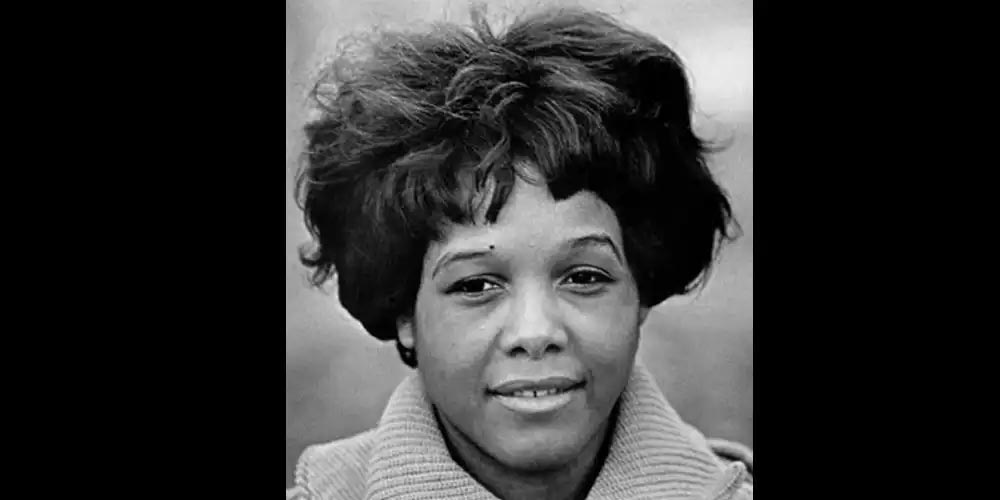
Anne Moody (1940 - 2015), Civil Rights Activist and author of Coming of Age in Mississippi, and Mr. Death: Four Stories. Photo by Jack Schrier. -
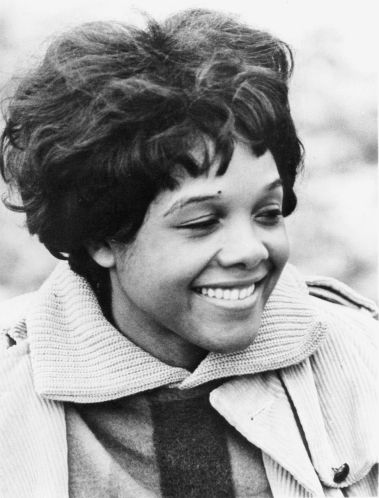
Anne Moody (1940 - 2015), Civil Rights Activist and author of Coming of Age in Mississippi, and Mr. Death: Four Stories. Photo by Jack Schrier.
-
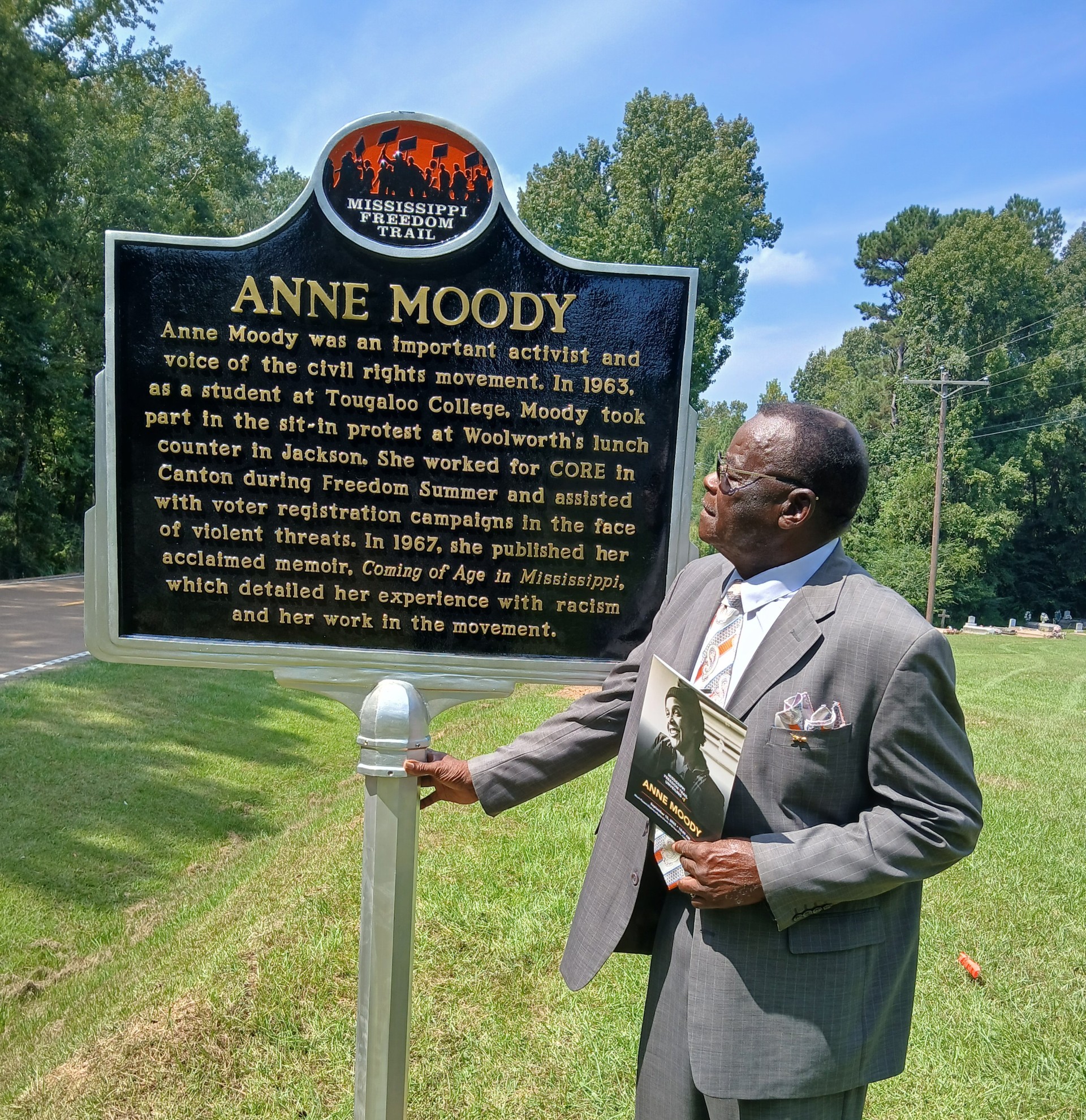
Fred Moody Jr., brother of Anne Moody, reads the inscription on the Mississippi Freedom Trail marker erected in her honor. The marker was unveiled in a ceremony on Monday, September 15, 2025, at Mount Pleasant Missionary Baptist Church in Centreville, Mississippi. Fred is mentioned throughout "Coming of Age in Mississippi". Photo courtesy of Roscoe Barnes III -

This is the iconic image of Anne Moody’s participation in the sit-in protest at Woolworth's lunch counter on May 28, 1963, in Jackson, Mississippi. Moody, far right, is pictured with fellow Tougaloo College student, Joan Trumpauer, and Tougaloo Professor John Salter. They were violently harassed by a mob, some of whom poured sugar, ketchup, and mustard on the heads of the activists. Fred Blackwell of the Jackson Daily News took the original photo, and The Associated Press later distributed the image. -
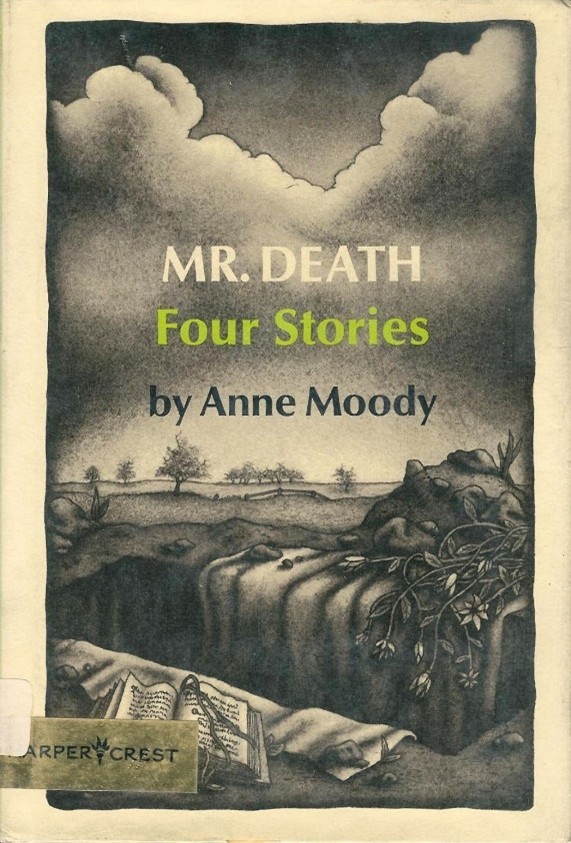
Mr. Death: Four Short Stories a book written by Anne Moody that echoes similar themes to that of her autobiography, Coming of Age in Mississippi. Mr. Death was first published on January 1, 1975. Imagery courtesy of Roscoe Barnes III. -
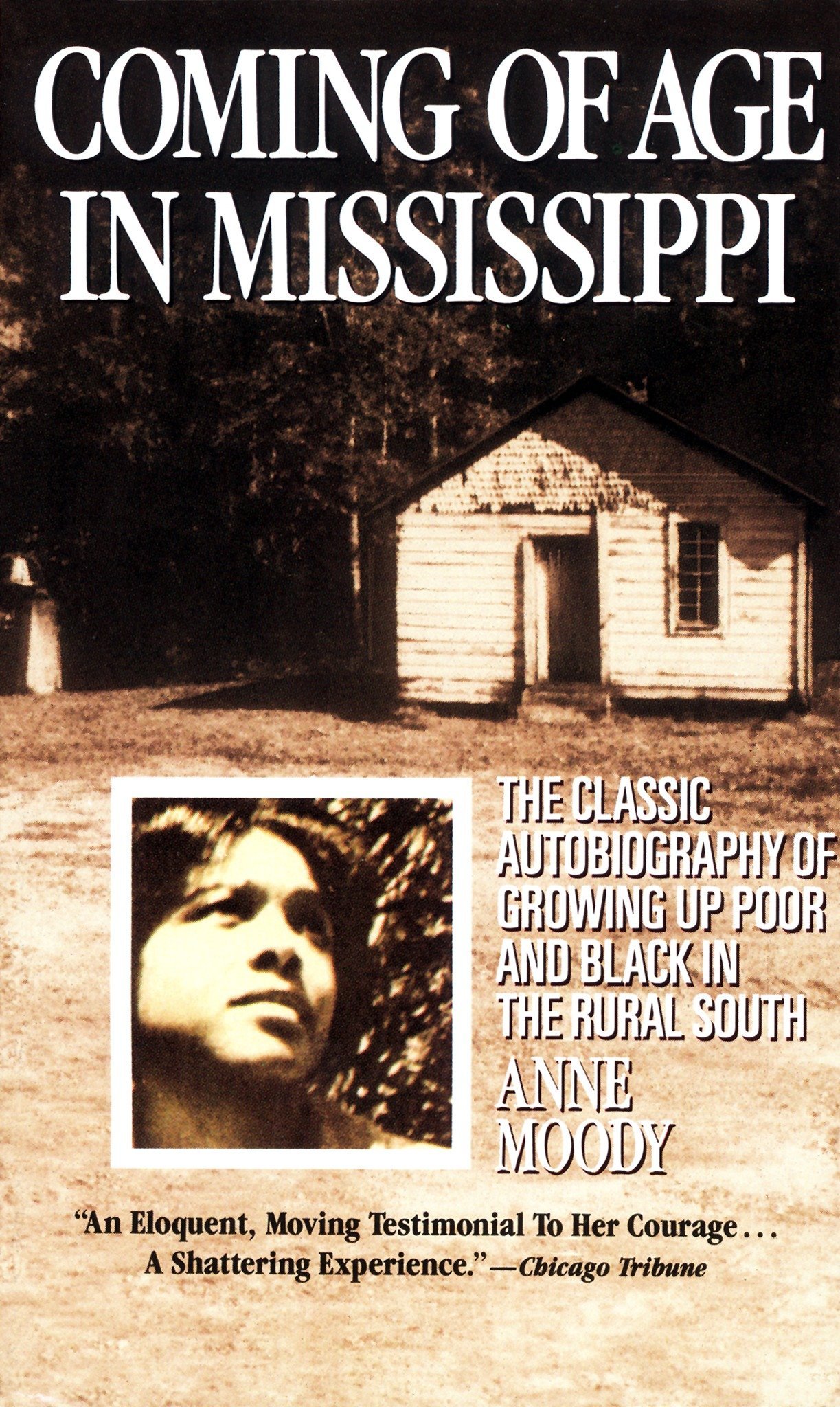
Coming of Age in Mississippi is a memoir Moody published on December 3, 1968, by The Dial Press. Moody's memoir captures her experiences growing up in the South during the Jim Crow Era and Civil Rights Movement. Imagery courtesy of Roscoe Barnes III. -
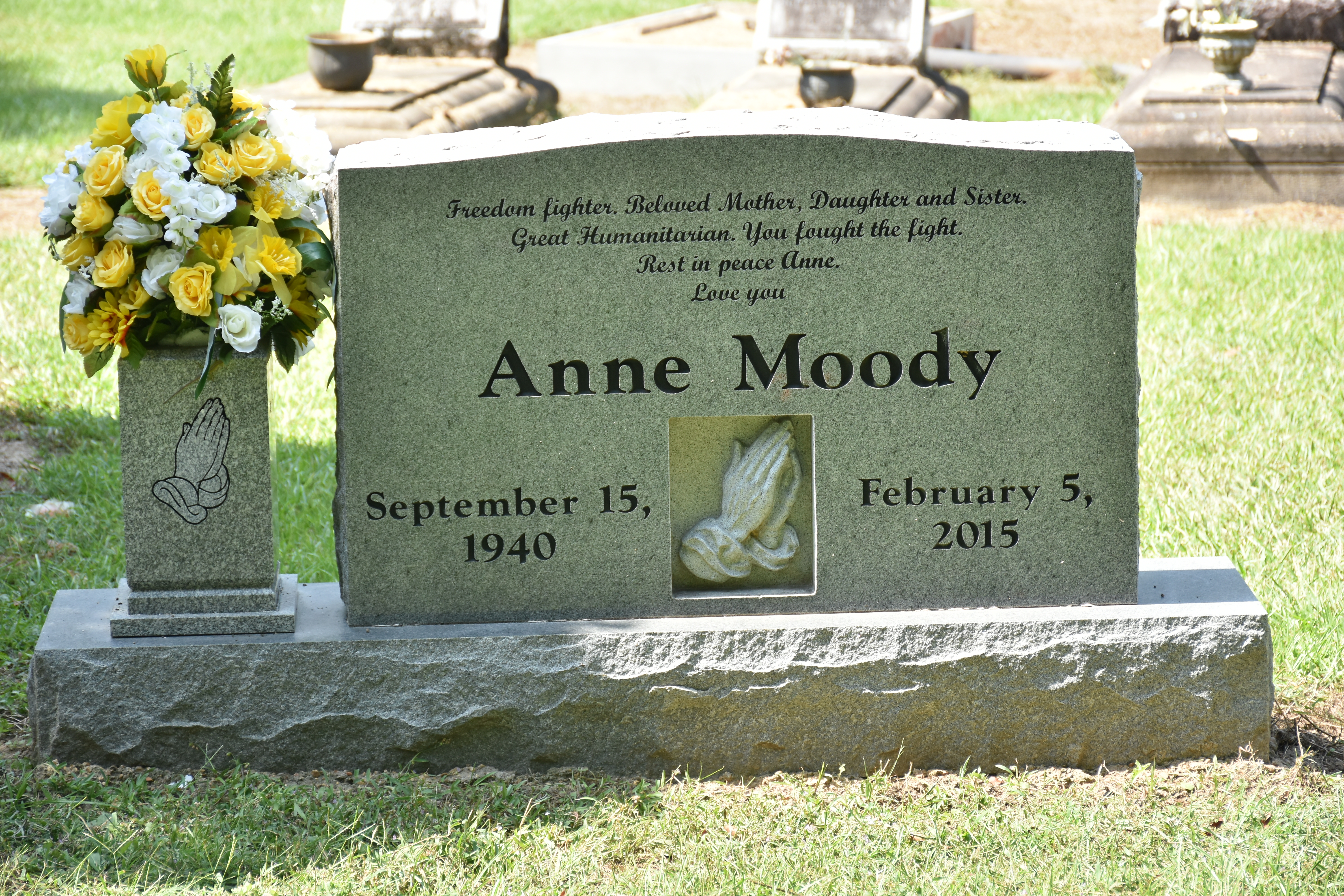
This is a photograph of Anne Moody's gravestone located in the Mount Pleasant Missionary Baptist Church Cemetery in Centreville, Mississippi. Image courtesy of Albert L. Jones. -
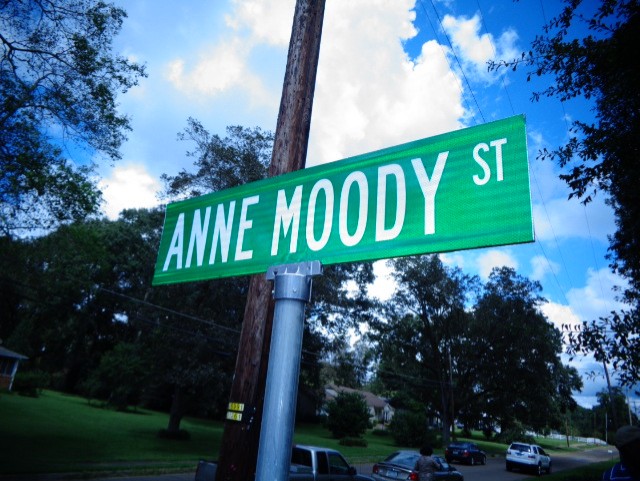
The Town of Centreville, Mississippi, Anne Moody’s hometown, honored her on September 15, 2017, with a street sign bearing her name. Photo by Roscoe Barnes III -
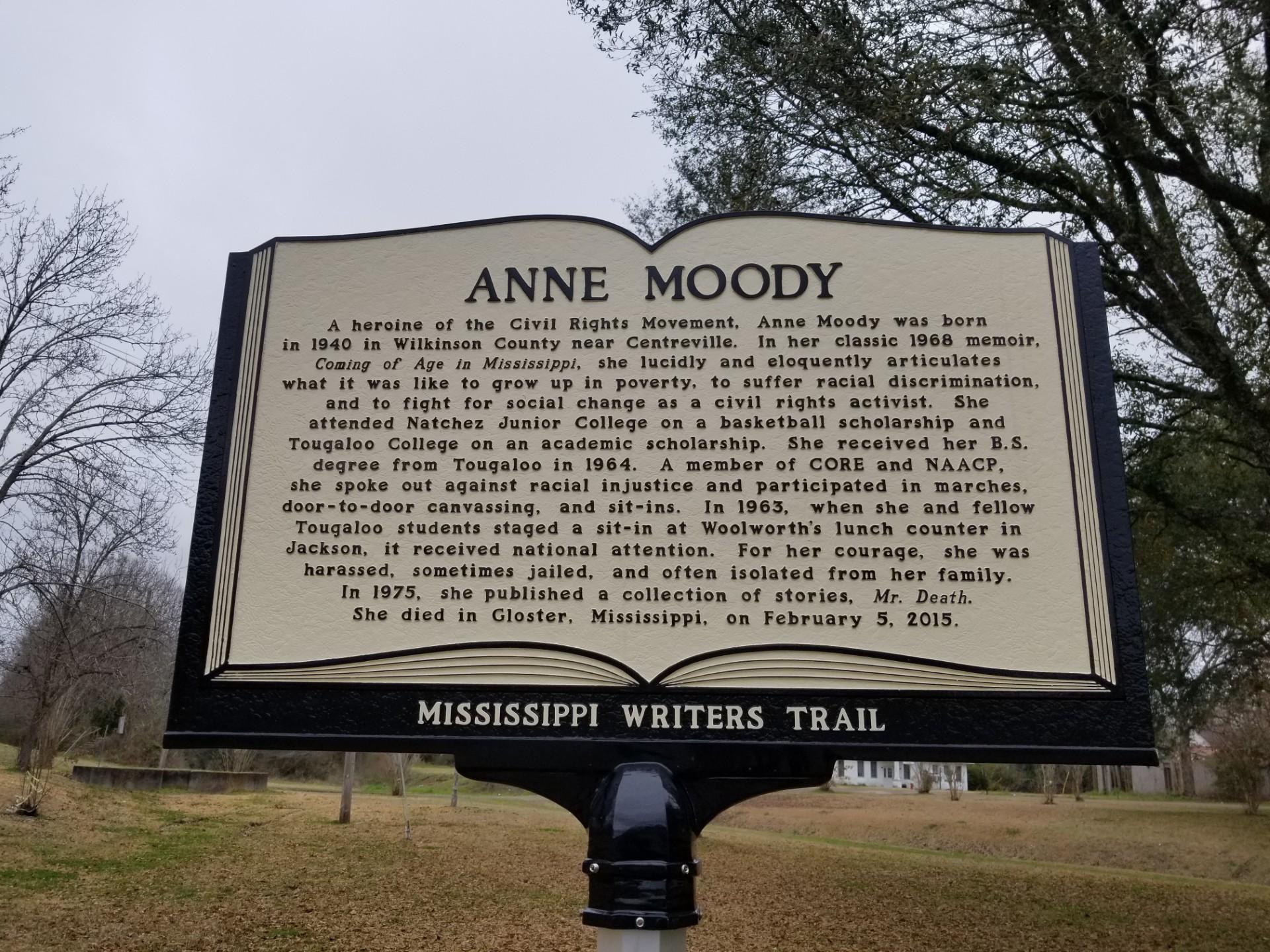
This is a Mississippi Writers' Trail historical marker recognizing Anne Moody as an influential Mississippi writer. Image courtesy of Roscoe Barnes III.
Françoise N. Hamlin. “Historians and Ethics: Finding Anne Moody.” The American Historical Review, Volume 125, Issue 2, April 2020, Pages 487–497, https://doi.org/10.1093/ahr/rhz1228
Moody, Anne. Coming of Age in Mississippi. New York: Dial Press. 1968.
Morishita, Mayumi. “Anne Moody: (1940–2015) Author and Activist.” In the Mississippi Encyclopedia. https://mississippiencyclopedia.org/entries/anne-moody/ Accessed November 7, 2025
O’Brien, M.J. We Shall Not Be Moved: The Jackson Woolworth's Sit-In and the Movement It Inspired. Jackson: University Press of Mississippi, 2014.
Pettus, Emily Wagster. “Anne Moody, sat stoically at violent Woolworth’s sit-in, dies at 74.” Los Angeles Times, February 10, 2015. https://www.latimes.com/local/obituaries/la-me-anne-moody-20150211-story.html
Accessed November 7, 2025.
Spencer, Debra. “An Interview with Anne Moody, February 19, 1985 / interviewed by Debra Spencer. Transcript.”
https://da.mdah.ms.gov/series/audio-collections/transcripts/detail/1052139
Accessed November 7, 2025.
Thrailkill, Laurel. “'Seeing Jim Crow Mississippi through her eyes': Anne Moody honored on MS Writers Trail.” Hattiesburg American, May 29, 2021. https://www.hattiesburgamerican.com/story/news/local/2021/05/29/mississippi-writers-trail-honors-anne-moody-civil-rights-activist-centreville/7487465002/
Accessed November 7, 2025.
Wheeler, Leigh Ann. “Coming of Age in Mississippi Still Speaks to Nation’s Racial Discord,” The Conversation, October 5, 2018, https://theconversation.com/coming-of-age-in-mississippi-still-speaks-to-nations-racial-discord-50-years-later-95584
Accessed November 7, 2025.
Williamson, Matt. “Who was Anne Moody? Prison chaplain works to keep legacy alive.” The Clarion Ledger, March 4, 2018. https://www.clarionledger.com/story/magnolia/2018/03/04/who-anne-moody-mississippian-works-keep-legacy-alive/375848002/
Accessed November 7, 2025.